7 Map-Locked Hero Rules That Decide Your Marvel Rivals Pick
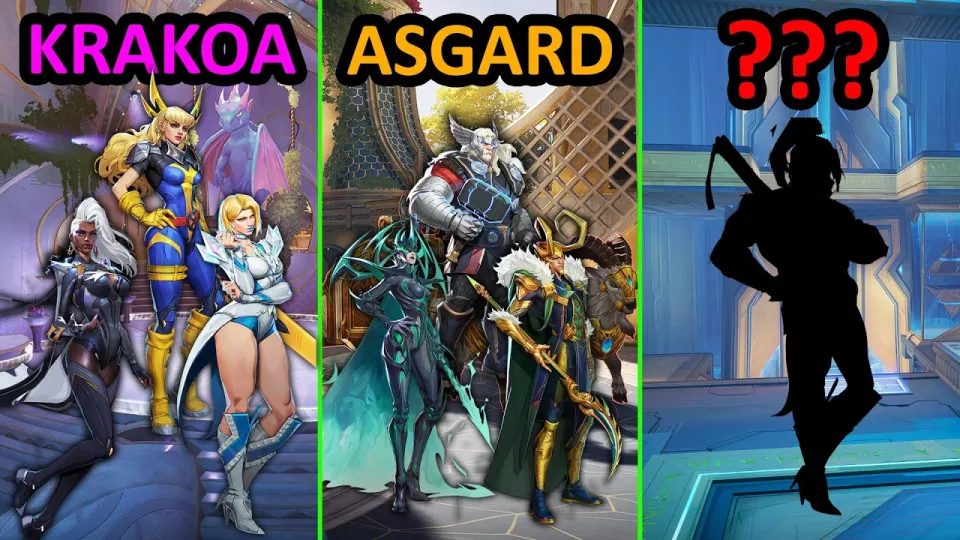
Video: The MAP Decides Our Heroes in Marvel Rivals
Want articles like this for your own video to promote it on YouTube and Google? Order them through the Telegram bot @sat_sit_bot. The bot writes and publishes the articles itself (with your YouTube video embedded) on popular topical websites (no ads). Free trial — 50 articles.
· based on the channel Salty Phish
Key takeaways
- Salty Phish's map-locked challenge assigns a hero pool based on the map you queue into, so a Klyntar game means Venom and an Asgard map means Thor, Loki or Hela.
- Shin-Shibuya is a 2099 timeline map that includes the Stark-Fujikawa building, which gives Iron Man a lore reason to count.
- In Marvel Rivals lore the Guardians of the Galaxy were hired by Wakanda and leave from the Wakanda spaceport to fight the symbiotes on Klyntar.
- Bucky Barnes received his cybernetic arm from the Wakandans in Rivals canon, not from Tony Stark.
- Devil Dinosaur lives in New York with Moon Girl, so he qualifies for Lower Manhattan despite being a dinosaur.
Marvel Rivals has more than 40 playable heroes, and the map you queue into can narrow that list to a handful of lore-accurate picks. A map-locked hero challenge works like this: whatever map the matchmaker gives you, you may only play characters who actually belong to that location — Venom on Klyntar, Thor, Loki or Hela on Asgard, and so on. Salty Phish built a full video around that rule set, and the community immediately started auditing the picks. You can watch the live version of these experiments on Salty Phish's Twitch channel.
How the map-locked hero challenge works in Marvel Rivals
The format is simple and brutal at the same time: no hero is chosen before the map loads. Each quickplay queue rolls a location, and the location dictates the roster. A Klyntar match forces symbiote-adjacent heroes, an Asgard map unlocks the Norse corner of the roster, and a Wakanda map points at Black Panther and his supporting cast. The point is not to win every game but to test how well Marvel Rivals' map fiction holds up when you take it literally.
The rule creates two kinds of pressure. First, players who main one hero have to abandon them the moment an unrelated map appears. Second, the challenge exposes gaps — maps with only two or three defensible picks, or maps where the obvious hero is a terrible fit for the role the team needs. That is where the debate starts, because Marvel Rivals' backstory is deeper than the map art suggests.
The lore arguments that expand each map's hero pool
Shin-Shibuya is the clearest example of a map that hides extra picks. The location sits in a 2099 timeline, and the Stark-Fujikawa building appears on the map — a future subsidiary tied to Iron Man, who even has voice lines referencing it. That single detail pulls Iron Man into a map most players would file under Spider-Man and Psylocke only.
Wakanda is the opposite case: it looks narrow but is actually one of the widest pools in the game. In Rivals lore the Guardians of the Galaxy were hired by Wakanda and depart from the Wakanda spaceport on a mission to stop the symbiotes on Klyntar, which is why the Milano can be seen leaving in map animations. That reasoning justifies Star-Lord, Rocket, Groot, Gamora, Mantis and Drax, and it stretches to Venom if you follow the Knull thread. Bucky Barnes belongs there too, since Rivals canon has the Wakandans build his cybernetic arm — a detail he throws back at Tony Stark in an in-game exchange.
Lower Manhattan produces the funniest ruling. Devil Dinosaur looks like a joke pick, but he lives in New York with Moon Girl, so a giant dinosaur running around the city is canon rather than a stretch.
7 map-by-map hero rulings worth copying
These are the recurring calls that make a map-locked run feel fair instead of arbitrary:
- Klyntar — Venom is the anchor pick, with symbiote-adjacent heroes as support.
- Asgard — Thor, Loki and Hela form the core; anyone else needs a lore excuse.
- Shin-Shibuya — Spider-Man and Psylocke are obvious, but Iron Man counts through the Stark-Fujikawa building.
- Wakanda spaceport — Black Panther plus the Guardians, and Bucky on the strength of his Wakandan arm.
- Lower Manhattan — Devil Dinosaur qualifies because Moon Girl's partner operates in New York.
- Midtown — the most debatable map, since a dense city block can justify Winter Soldier, Adam Warlock, Black Panther and Iron Man depending on how strict you are.
- Spider-Islands — a 2099 setting, which opens the door to Punisher and Captain America as much as to Psylocke.
Where the map rules break down
The system collapses the moment a map has no healer or no tank in its lore pool. Shin-Shibuya is the usual offender: the fiction points at duelists, but a team still needs sustain, so players either break the rule or lose. The same happens on maps tied to a single faction with a thin roster.
A second problem is that Marvel Rivals' canon is generous to the point of absurdity. Once you accept that Wakanda runs an intergalactic empire and that the Guardians were contracted by Shuri, almost any space-faring hero becomes legal on a Wakandan map. Strict players draw a hard line at characters who appear on the map or are named in its voice lines; loose players accept any connection, however thin. Both versions are defensible, which is exactly why the challenge generates so much argument.
Common questions about map-based hero picks
Most pushback in the community is not about the rules themselves but about omissions. Viewers regularly point out that a hero was skipped despite a clear connection — Iron Man on Shin-Shibuya, Punisher on the 2099 maps, or the Winter Soldier on anything touching Wakanda or Midtown. Others argue the opposite way, saying a single background poster or a wanted screen is not enough to justify a pick.
A practical fix is to write the pool down before the session starts, map by map, and publish it so the audience can check the run against it. That turns a casual gimmick into a repeatable format, and it also gives you a reason to revisit maps you normally skip. If you want to build your own version, start with the four or five maps you know best and expand from there.
All the links from the video
- Live streams: http://www.twitch.tv/saltyphish/
- Twitter: https://twitter.com/SaltyPhish
- TikTok: https://www.tiktok.com/@saltyphish
- Reddit: https://reddit.app.link/r_SaltyPhish
- Instagram: https://www.instagram.com/saltyphish/
Final thoughts on map-locked Marvel Rivals runs
Map-locked hero rules turn a normal quickplay session into a lore quiz, and the disagreements are the best part. The strongest version of the challenge uses the game's own details — the Stark-Fujikawa tower, the Milano leaving Wakanda, Bucky's arm — rather than guesswork. Salty Phish is the channel behind this breakdown, and the format is easy to copy with friends or in a stream. If you want to see the rules tested live, drop by Salty Phish on Twitch and try the challenge yourself.
Questions & answers
Why does Iron Man count on the Shin-Shibuya map in Marvel Rivals?
Shin-Shibuya is set in a 2099 timeline, and the map includes the Stark-Fujikawa building, a future subsidiary tied to Iron Man. He also has in-game dialogue referencing the location, so the connection is canon rather than a stretch.
Do the Guardians of the Galaxy belong on Wakanda maps?
Yes, according to Rivals lore. Wakanda hired the Guardians and sent them from the Wakanda spaceport to Klyntar to deal with the symbiotes, and the Milano can be seen leaving in map animations. That makes Star-Lord, Rocket, Groot, Gamora and Mantis defensible picks.
Should Punisher and Captain America count on Spider-Islands?
Spider-Islands takes place in 2099, and both characters have 2099 versions, so a strict reader can allow them alongside Psylocke. It is a looser ruling than a direct map appearance, which is why players disagree about it.
Is Devil Dinosaur a valid New York pick?
He is. Devil Dinosaur lives in New York with Moon Girl, so a dinosaur on a Lower Manhattan map is consistent with the comics. It looks like a joke pick but holds up under the same logic used for other heroes.
Source: The MAP Decides Our Heroes in Marvel Rivals · Markdown version